 Listicle
Best Eco-Friendly Materials for Exhibition Display Stands
Last Updated: November 10, 2026
Quick Summary
The best eco-friendly materials for exhibition display stands are reusable aluminium modular frames paired with recycled tension-fabric graphics. Aluminium is 100% recyclable and can be rebuilt across many events, while fabric graphics can be reprinted and reused rather than discarded after each show.
- Aluminium modular frames are described as 100% recyclable and suited to repeat exhibitors.
- Modular systems let you swap panels each event without rebuilding the whole structure.
- Use board for fascias, plinths and graphic backers, keeping load-bearing parts in a reusable frame.
- Polyester is commonly suggested as a PVC alternative for graphics, with latex or eco-solvent inks as lower-impact options.
- Confirm venue rules such as fire ratings and freestanding limits before choosing materials.
Table of Contents
- Reusable Exhibition Display Stands: Aluminium and Modular Systems
- Cardboard Exhibition Stands and Recyclable Stand Panels
- Recycled Fabric Exhibition Graphics and Printed Media
- Choosing Your Stand Materials and Booking Print-Ready Graphics with Print Brain
- Frequently Asked Questions
Reusable Exhibition Display Stands: Aluminium and Modular Systems
Reusable aluminium modular systems are where planning for the best eco-friendly materials for exhibition display stands starts. Reusable exhibition display stands cut waste because the frame is built to be taken down, stored and rebuilt for the next event. Colour Graphics 2026 guide to reusable exhibition stands
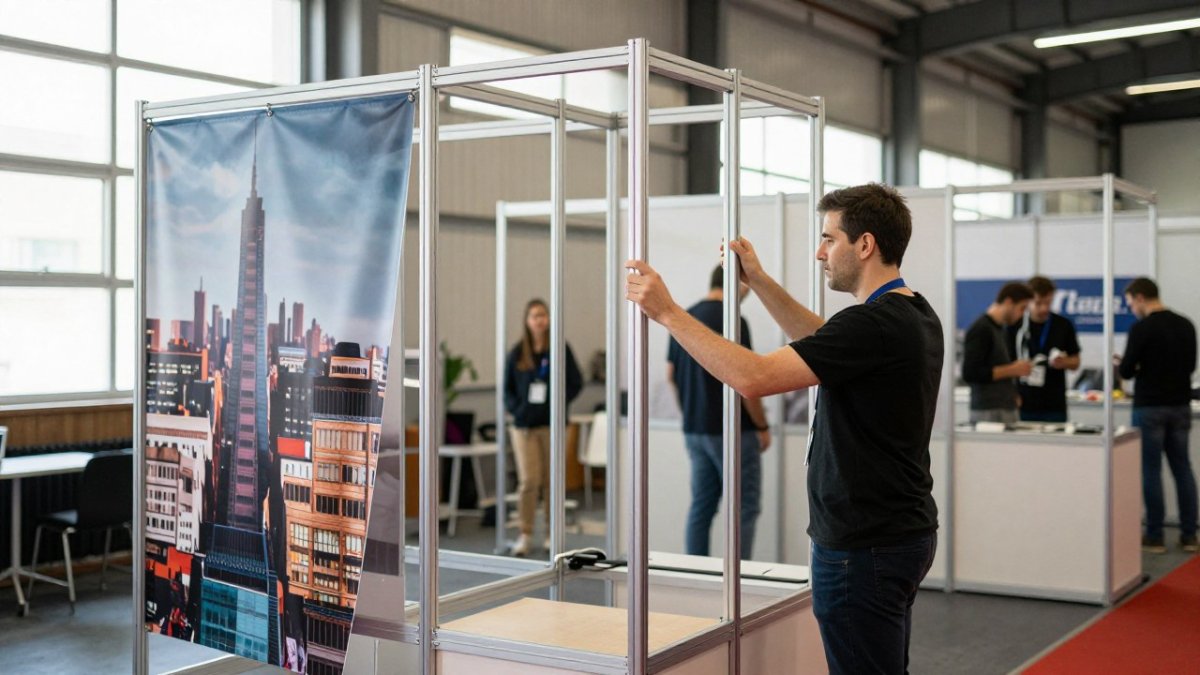
Aluminium offers a practical balance of weight, strength and recyclability. T3 Systems describes its aluminium framing as 100% recyclable and pairs it with reusable SEG fabric graphics, so the frame and the graphic can both stay in circulation. T3 Systems eco-friendly exhibition stands
Modular designs suit repeat exhibitors best. Exhibit Potential recommends combining modular aluminium framing with recycled tension-fabric graphics, which lets you swap panels for each event without rebuilding the whole structure. Exhibit Potential sustainable exhibition stands guide
Our stand range is a good place to compare the best eco-friendly materials for exhibition display stands: explore our exhibition stands.
Cardboard Exhibition Stands and Recyclable Stand Panels
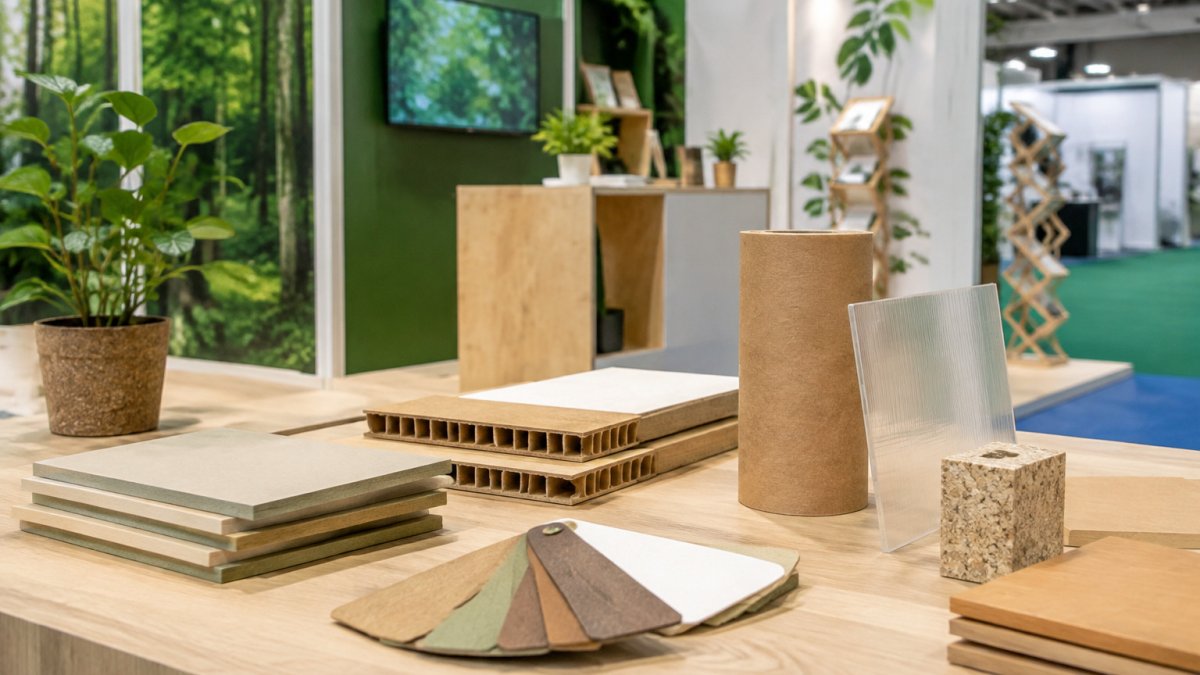
Board works best as a supporting element. Use it for fascias, plinths and graphic backers, and keep load-bearing parts in a reusable frame. For lighter fabric options, see our stretch fabric display stands and cardboard totem displays.
Recycled Fabric Exhibition Graphics and Printed Media
Graphics often account for much of a stand's environmental footprint, so the print surface matters. Backdropsource compares reusable fabric graphics with PVC and considers cost per show and end-of-life options, not just the material itself. Backdropsource eco-friendly exhibition stands guide
Polyester is commonly suggested as a PVC alternative, and latex or eco-solvent inks are presented as lower-impact options to solvent inks. Soyang outlines these alternatives, though you should confirm the specific ink and substrate with your printer. Soyang eco-friendly exhibition display stands guide
Recycled fabric graphics can be reprinted and reused across events, spreading their impact over many shows. See our fabric pop up display stands.
Choosing Your Stand Materials and Booking Print-Ready Graphics with Print Brain
Most sustainability decisions come down to three questions: how many events the stand will serve, how much weight and structure it needs, and what happens to each component afterwards. Answer these before choosing products, so a green label does not hide a material that cannot be reused or recycled in practice.
The table summarises how the main options compare on factors that drive whole-life impact. It is a starting point, since real figures depend on gauge, coatings, transport distance and local waste collection.
| Material | Typical use | Reuse potential | Recyclability in practice | Relative weight | Relative upfront cost |
|---|---|---|---|---|---|
| Aluminium modular frame | Repeat exhibitors, structural framing | High, over many events | High for the frame, if separated from fabric | Light to medium | Higher |
| Recycled tension fabric | Graphics across frequent shows | High, if reprinted and re-tensioned | Depends on fabric blend and ink | Light | Medium |
| Paper honeycomb board | Single-use or short-run panels | Low | Good if uncoated, poor if laminated | Light | Low |
| Solid engineered board | Plinths, fascias, one-off builds | Low to medium | Variable, often mixed-material | Medium to heavy | Low |
Match the frame to the number of events and the fabric or board to the graphic's lifespan. If graphics change each show, the biggest saving usually comes from reprinting fabric rather than replacing the stand.
Venue rules can override a preferred material. Fire ratings, freestanding panel limits and gangway requirements constrain choice, so confirm them with the venue or organiser first.
Print Brain offers free artwork checks and bespoke quotes. Request a quote against your exact specification.
Frequently Asked Questions
What are the most eco-friendly materials for exhibition display stands?
The strongest options are reusable modular aluminium frames and recycled-content fabric graphics. Which one is best depends on how many times the stand will travel and how it will be disposed of. A stand reused across many shows usually has a lower overall impact than a single-use build, even if its raw materials are less obviously green. Ask any supplier for evidence of recycled content or certification before relying on the claim.
Is recycled fabric suitable for exhibition graphics?
Recycled fabric can be a sensible option for exhibition graphics. Check that the print process suits the fabric, and confirm the graphic panels can be removed cleanly from the frame at the end of the event.
Are cardboard exhibition stands durable enough to reuse?
Cardboard and fibreboard stands are best treated as single or limited-use builds. They suit short events, lightweight designs and light graphics, but they are more vulnerable to damp, handling damage and repeated assembly. Honeycomb board is more robust than standard cardboard and can be recycled once the stand is no longer needed. For multi-event use, a modular aluminium system is usually the better long-term choice.