 How-to
How to Choose Poster Paper for Indoor Shop Displays
Last Updated: November 18, 2026
Quick Summary
To choose poster paper for an indoor shop display, decide on three things: paper weight, finish, and a physical print proof before you approve the order. Heavier stock feels more solid and stays flatter on display boards, while gloss makes colours vivid and matt reduces glare under shop lighting.
- Paper weight is measured in GSM, grams per square metre.
- Heavier sheets resist curling and stay flatter when pinned or taped up.
- Mid-weight stock balances cost and presentation for most indoor displays.
- Gloss finishes make colours vivid but can glare under spotlights.
- Ask for a physical print proof and check it under your shop lighting.
Table of Contents
- Choosing Poster Paper Weight and Thickness
- Gloss vs Matt Poster Paper: Which Finish Suits Your Display
- Checking a Physical Print Proof and Preparing Your Shop Display Order
- Frequently Asked Questions
Choosing poster paper for an indoor shop display comes down to three decisions: paper weight, finish, and how the print will be checked before the order goes through.
Choosing Poster Paper Weight and Thickness
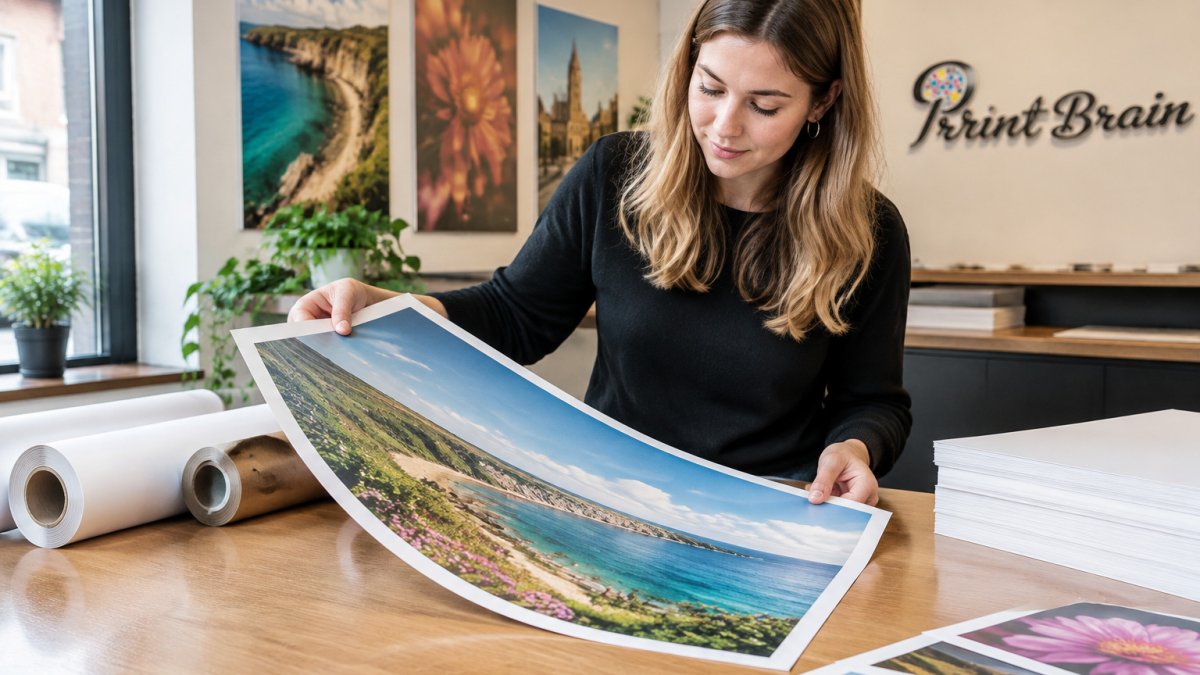
Paper weight is measured in GSM (grams per square metre) (bsigroup.com). A heavier sheet feels more solid, resists curling and stays flatter when pinned or taped to a display board.
For most indoor shop displays, a mid-weight stock balances cost and presentation. Lighter stock suits temporary promotions; heavier stock suits posters that will be handled.
A thin sheet can look cheap under shop lighting, even when the artwork is excellent.
Gloss vs Matt Poster Paper: Which Finish Suits Your Display
Gloss finishes make colours look vivid and punchy, which works well for product photography and bold promotional graphics. The downside is glare under spotlights and from nearby windows.
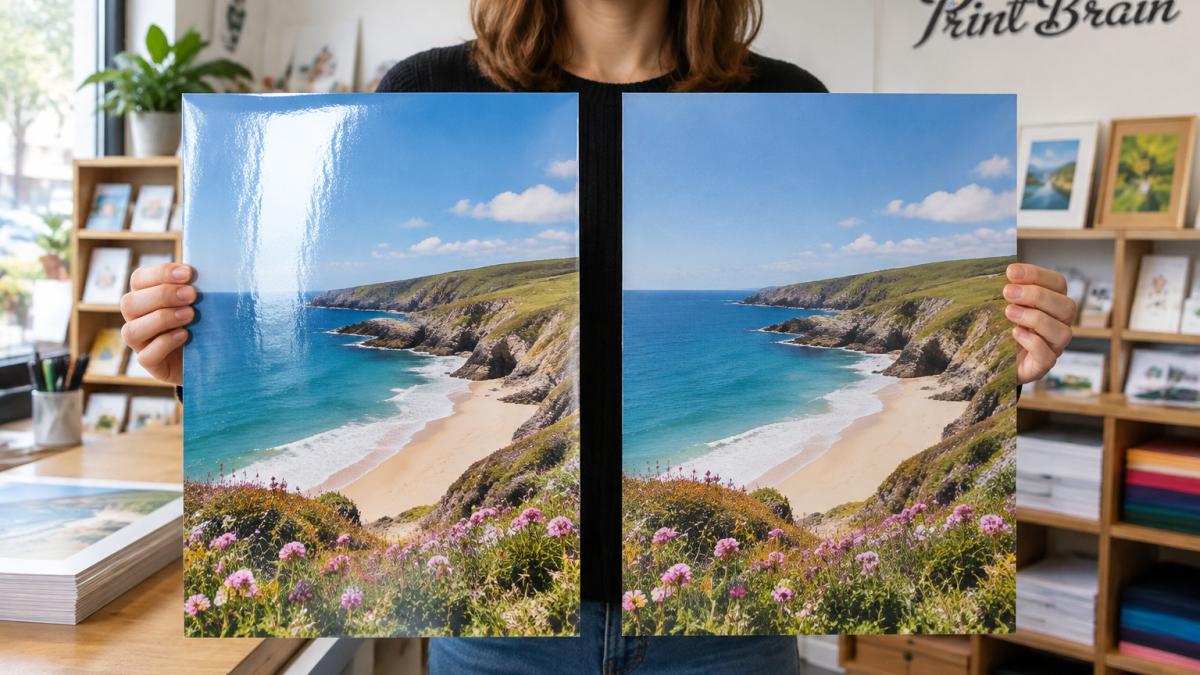
Matt finishes reduce reflections and give text a calm, readable look, suiting information-heavy displays and posters placed where lights bounce off the surface.
At Print Brain, we are always happy to advise on paper and finishing options.
Checking a Physical Print Proof and Preparing Your Shop Display Order
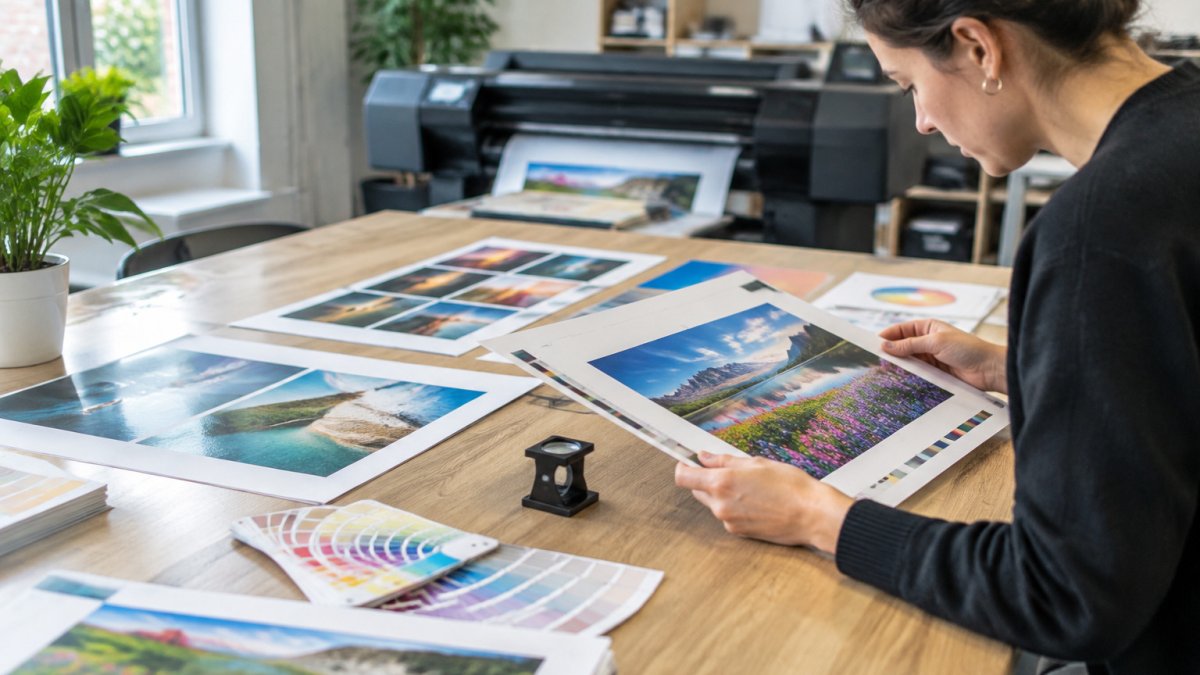
Before you approve a large order, ask for a physical print proof. Screen colours do not always match the press, and a proof lets you check them under the lighting your poster will hang under.
When preparing your files, set them up as CMYK rather than RGB, use 300 dpi for images and include 3mm bleed. Low-resolution images are a common problem in print files, so check your artwork carefully before sending it.
Print Brain offers free artwork checks, so your files can be reviewed before production. To compare paper and finish options, browse our range of posters or explore our indoor poster options for shop displays. For guidance on evaluating print services more widely, see how to choose custom business card printing services, and for a checklist that helps you avoid poor print quality, read avoiding poor print quality. Our guide to preparing print-ready files walks through the artwork steps in more detail.
Frequently Asked Questions
What paper is best for indoor shop posters?
For most indoor shop posters, a coated paper in a mid-weight range gives a good balance of colour depth and rigidity. Heavier stock feels more premium and resists bending when displayed on an easel or pinned to a board. Lighter uncoated stock is cheaper but can look flat and dull under shop lighting. Ask your printer for a sample of two or three stocks before committing to a full run, and compare them in the actual spot where the poster will hang. Pricing depends on quantity, size and delivery, so check Print Brain's website or request a quote for current costs.
Is gloss or matt poster paper better for a shop window?
Gloss paper makes colours look vivid and suits bright product photography, but it reflects light and can be hard to read near windows with strong daylight or spotlights. Matt paper cuts glare and is easier to read from an angle, which is often more useful for text-heavy promotions. For a shop window that faces direct sun, a matt or satin finish is usually the safer choice. Test both finishes behind the glass before you order a large quantity.
Why should I order a physical print proof before a full poster run?
A physical print proof shows you how colours, fonts and images actually look on your chosen paper, which a screen cannot do. Check that the file was set up as CMYK rather than RGB, that images are at 300 dpi and that 3mm bleed is included. Catching a problem on one proof is far cheaper than reprinting a full shop display. Print Brain offers free artwork checks, so send your file in early to give yourself time to make changes.